
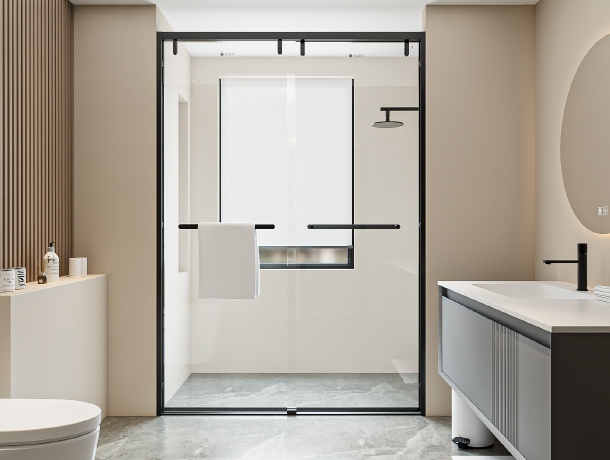
Sliding vs pivot shower doors is a common comparison for distributors, contractors and project buyers selecting a shower enclosure range. Hinged doors are also part of the decision because the terms pivot and hinged are sometimes used loosely, even though the hardware position, opening movement and installation requirements can differ.
The right door type depends on bathroom space, opening width, user access, cleaning expectations, target price and product style. YFX Shower manufactures complete shower enclosures with glass and matching frame and hardware kits without glass. The MOQ is one set, so buyers can evaluate a model before planning a larger order.
Quick comparison of sliding, pivot and hinged shower doors
| Door type | Main advantage | Space requirement | Typical use |
|---|---|---|---|
| Sliding shower door | No outward door swing | Works well where floor space is limited | Alcoves, rectangular enclosures and compact bathrooms |
| Pivot shower door | Wide, smooth opening with a clean appearance | Requires clearance for the moving panel | Modern enclosures and medium-to-large openings |
| 90-degree hinged shower door | Direct full-swing operation | Requires clear outward or inward swing space | Premium enclosures and layouts with sufficient clearance |
This table is a starting point. The usable entrance, fixed panel arrangement, glass size and hardware specification must be reviewed for the exact model.
If you are also considering a folding arrangement, read our pivot vs bi-fold shower door buying guide for a closer comparison of swing clearance, folded-panel space, entrance width and hardware maintenance.
What is a sliding shower door?
A sliding shower door moves horizontally along a top rail, bottom guide or another supported track system. Because the panel does not swing into the room, sliding doors are often selected for bathrooms where a toilet, vanity or other fixture is close to the enclosure.
Sliding systems may use two moving panels, one moving panel with one fixed panel, or a multi-panel arrangement. Roller quality, guide design, adjustment range and anti-jump protection are important parts of the complete system. The frame may be aluminum, stainless steel or a combination of materials, depending on the model.
Sliding shower doors are often a good fit when:
- Outward swing space is limited.
- The opening is wide enough for overlapping panels.
- The buyer wants a practical enclosure for a residential range.
- The layout is an alcove or rectangular shower area.
- Easy daily operation is a priority.
Browse YFX sliding shower door models for available structures and finishes.
What is a pivot shower door?
A pivot door rotates around pivot points positioned at the top and bottom of the panel. Depending on the design, the pivot axis may be close to the edge or set inward. An offset pivot can move part of the glass into the enclosure while the remaining section moves outward, which may reduce the external swing compared with a conventional edge hinge.
Pivot systems can provide a clean, modern appearance and a generous entrance. The hardware, panel width and support structure must be matched to the glass specification. Wall condition and installation accuracy are especially important because the moving panel transfers load through the pivot system.
Pivot shower doors are often considered when:
- A wider entrance is preferred.
- The bathroom has reasonable door-swing clearance.
- The design needs a modern framed or semi-frameless appearance.
- The project requires a simple single-door movement.
- Top and bottom pivot support suits the enclosure structure.
See the pivot shower door category for product examples.
What is a 90-degree hinged shower door?
A hinged shower door normally rotates from hinges fixed to a wall, frame or adjacent glass panel. A 90-degree model opens to a defined angle based on the hardware design. Hinged doors can create a direct entrance and are frequently used in premium or minimalist shower enclosures.
The available opening direction should be confirmed before ordering. Some models open outward, some allow inward and outward movement, and others are limited by seals, handles or nearby fixtures. The wall or supporting panel must be suitable for the door weight and hinge arrangement.
Hinged shower doors may be the better choice when:
- The bathroom has enough swing clearance.
- A clean opening without an overlapping sliding panel is desired.
- The project specification calls for visible hinges or a minimalist look.
- Access and entrance width are more important than saving floor space.
- The supporting structure can carry the moving glass panel.
Explore 90-degree hinged shower door models for matching enclosure designs.
Space planning and entrance width
Bathroom layout is usually the fastest way to narrow the choice. Measure the finished wall opening, shower tray or floor area, ceiling constraints and the distance to nearby fixtures. Do not select a door only from the overall enclosure width. The clear entrance can be smaller because of fixed panels, overlapping glass, wall profiles and handles.
Sliding doors protect the room from a large swing path, but overlapping panels reduce the maximum entrance. Pivot and hinged doors can provide a more open entrance, but the moving panel needs a safe path. For hotel, apartment or accessible projects, confirm the required clear opening with the local project team before approving the product.
Cleaning and maintenance differences
A sliding enclosure includes rollers, guides and overlapping areas that should remain clean and correctly adjusted. Buyers should review whether rollers can be removed or adjusted during service and whether replacement parts are available.
Pivot and hinged doors have fewer track areas, but hinges, pivot points, seals and fasteners still require inspection. Water management depends on more than door type: threshold design, seals, glass alignment, floor level and installation all affect performance.
For every style, use mild non-abrasive cleaning products and follow the care instructions for the selected metal finish. Harsh chemicals can damage coated aluminum, stainless surfaces, seals and plated hardware.
Glass, frame and hardware considerations
Door movement must be evaluated as a complete system. Glass thickness, panel size, frame structure, roller or hinge capacity, handle position and wall fixing all work together. Buyers should avoid changing the glass specification or hardware independently without confirming compatibility.
Aluminum profiles are useful for adjustable framed and semi-frameless systems. 304 stainless steel is often selected for premium rails, channels and exposed hardware. Read our guide to aluminum vs stainless steel shower enclosure frames for a detailed material comparison.
Complete enclosure or frame and hardware kit?
Sliding, pivot and hinged models can be quoted in two supply formats. A complete shower enclosure includes the specified glass, profiles and matching hardware. A frame and hardware kit does not include glass, allowing a qualified buyer to source and process tempered glass locally.
A frame kit can reduce the weight and risk of shipping large glass panels, but it requires accurate glass drawings, hole positions, edge details and tolerances. Finished product photos may be used to show the assembled appearance, while the dedicated frames and profiles category is sold without glass.
Compare both options in our guide to complete shower enclosures versus frame kits.
How should an importer choose a door type?
For a retail range, consider the bathroom sizes, preferred price level and installation habits in the target market. A balanced collection may include sliding models for compact rooms, pivot models for modern mid-range projects and hinged models for premium layouts.
Before requesting a quotation, provide:
- Finished opening width and enclosure height.
- Shower layout, tray shape or installation drawing.
- Sliding, pivot or hinged opening preference.
- Complete enclosure with glass or frame and hardware kit without glass.
- Preferred aluminum or 304 stainless steel specification.
- Finish, handle style and packaging requirements.
- Destination country, quantity and OEM branding needs.
YFX Shower supports OEM dimensions, finishes and packaging subject to the selected model and confirmed specification. The MOQ starts from one set for evaluation or project orders. Review our OEM shower enclosure services for the quotation process.
Frequently asked questions
Which shower door is best for a small bathroom?
A sliding door is often the most practical option because it does not swing into the room. The final choice still depends on the opening width and the clear entrance created by the panel arrangement.
Is a pivot door the same as a hinged door?
Not always. A pivot door rotates around top and bottom pivot points, while a hinged door commonly uses side-mounted hinges. Product names vary between markets, so buyers should confirm the drawing and movement rather than relying only on the category name.
Which door type is easiest to clean?
Pivot and hinged designs may have fewer overlapping track areas, while sliding doors require attention to rollers, guides and overlaps. Actual cleaning depends on the threshold, seals, coating and hardware design.
Can these doors be customized?
OEM dimensions, finishes, glass specifications and selected hardware can be discussed for sliding, pivot and hinged models. Feasibility depends on the structure and order requirements.
What is the minimum order quantity?
The MOQ is one set, subject to final model and customization confirmation.
Request a door-type recommendation
Browse the full shower enclosure product range or contact YFX Shower factory with your dimensions, layout, target market and preferred supply format. We can compare suitable sliding, pivot and hinged options before preparing a quotation.